
Etiquetas
behaviorism, Frederick Skinner, Hans Eysenck, Jeffrey Alan Gray, Personality

Personality is defined as the set of habitual behaviors, cognitions and emotional patterns that evolve from biological and environmental factors. More behaviorally based approaches is defined personality through learning and habits.
Personality psychology is also divided among the first theorists, with a few influential theories being posited by Sigmund Freud, Alfred Adler, Gordon Allport, Hans Eysenck, Abraham Maslow, and Carl Rogers. The trait based approach has yielded multiple conceptions of personality, including a number of five factor models, Eyssenk´s traits, Cattel´s traits and Cloninger´s temperament and carácter traits.
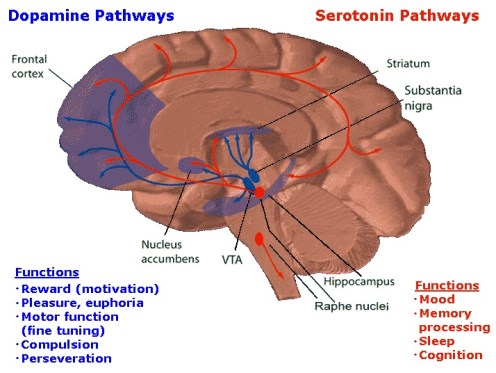
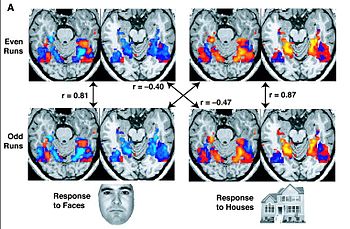
The biological basis of personality is the theory that anatomical structures located in the brain contribute to personality traits.. Tis stems from neuropsycology, which studies how the structure of the brain relates to various psychological processes and behaviors. In human beings, the frontal lobes are responsable for foresight and anticipation, and the occipital lobes are responsable for processing visual information. In addition, certain physiological functions such as hormone secretion also affect personality. Hormone testosterone is important for sociability (aggressiveness, and sexuality). Studies show that the expression of a personality trait depends on the volumen of the brain cortex it is associated with.
It has been shown that personality traits ar more maleable by environmental influences than researches originally believed. The types of parents a person has, can affect and shape their personality. Children who were securely attached tend to be more trusting, sociable, and are confident in their day-to-day life.
The school of behaviorism emerged in the 1910´s, led by Jhon B. Watson. Unlike psychodynamic theorists, behaviorists estudy only observable behavior. Skinner, Bandura and Walter Mischel all proposed important behaviorist theories.
Burrhus Frederic Skinner (1904-1990) was an american psycologist, behaviorist, autor, inventor, and social philosopher. He was Edgar Professor of Psychology at Harvard Universtiy from 1958 until his retirement in 1974. Skinner is known for describing the principles of operant conditioning. He believed that the environment determines behavior. Behaviors that have positive consequences tend to increase, while behaviors that have negative consequences tend to decrease. Considered free will an illusion and human action dependen on consequences of previous actions. To study operant coditioning, he invented the operant conditioning chamber, also kcown as the Skinner Box, and to measure rate he invented the cumulative recorder. Developed behavior analysis, the philosophy of that science he called radical behaviorism and founded a school of experimental research psycology: the experimental analysis of behaviour.
Hans Jürgen Eysenck (1926-1997) was a German-born English psychologist who spent his profesional career in Great Britain. He is best remembered for his work on intelligence and personality. Was Professor of Psycology at the Institute of Psychiatry, King´s College London, from 1955 to 1983. He was a mayor to the modern scientific theory of personality and a brillant teacher who helped found treatment for mental illnesses. He suggests importance of genetic factors in producing the great variety of intelectual differences which we observe in our cultura. The two personality dimensions extraversión and neuroticism were described in his 1967 book Dimensions of Personality, It is common practice in personality psycology to refer to the dimensions by the first letters, E and N.
E and N provided a two-dimensional space to describe individual differences in behaviour. An analogy can be made to how latitude and longitude describe a point on the face of the earteh. Eysenck noted how these two dimensions were similar to the four persoality types first proposed by the Greek phsysician Galen.
High N and hig E: Choleric type
Hign N an low E: Melancholic type
Low N and high E: Sanguine type
Low N and low E: Phlematic type

Jeffrey Alan Gray, a former student of Eyssenck´s, developed a comprehensive alternative theoretical interpretation (called Gray´s biospsychological theory of personality) of the biological and psychological data studied by Eysenck- leaning more heavily on animal and learning models. Is the Big Five model:
1. Conscientiousness
2. Agreeableness
3. Neuroticism
4. Openness to experience
5. Extraversion
Bibliography:
• The Physical Basis of Personality, V.H. Mottram´
Ed. Penguin Books, 1944
• Culture and Biological Man, Eliot D. Chapple, Ed. Holt, Rinehart and Winston, Inc; 1970
• The Physical Basis of Personality, G. Lapage. Nature, volume 156, number 3974, 29 december, 1945
• The Physical Basis of Personality. Charles R. Stockard ; American Journal of Sociology 3, nº 2 , Sep. 1931
• Wikipedia
Relationated links:
• Personality and Behaviour
• Stanford Enciclopedya: Behaviorism
https://plato.stanford.edu/entries/behaviorism/
• Psychiatry, Psychology King´s College London
https://www.kcl.ac.uk/study/subject-areas/psychiatry-psychology-and-neuroscience/index.aspx
 Blog de José Félix Rodríguez Antón