• Perfil

Blog de José Félix Rodríguez Antón

~ conocimiento de las cosas

Blog de José Félix Rodríguez Antón

Publicaciones de la categoría: cáncer

Knudson hypothesis: Tumor Suppressor Gene

19 miércoles Oct 2016

Posted by José Félix Rodríguez Antón in cáncer, CIENCIA

≈ Deja un comentario

Etiquetas

"two-hit" hypothesis, carcinogenesis, heterozygosity, Knudson, proto-oncogenes, RB1, restriction fragment length polymorphism RFLP, retinoblastoma, tumor suppressor genes TSG
knudson-hypotesis

The hypothesis: that cancer is the result of accumulated mutations to a cell´s DNA. It was first proposed by Carl O. Nordling in 1953, and later formulated by Alfred G. Knudson in 1971.

The multi-mutation theory on cancer was proposed by Nordling in the British Journal of Cancer in 1953: “the outbreak of cancer requires the accumulations of six consecutive mutations”. Knudson performed a statistical analysis on cases of retinoblastoma, a tumor of the retina that occurs both as an inherited disease and sporadically.

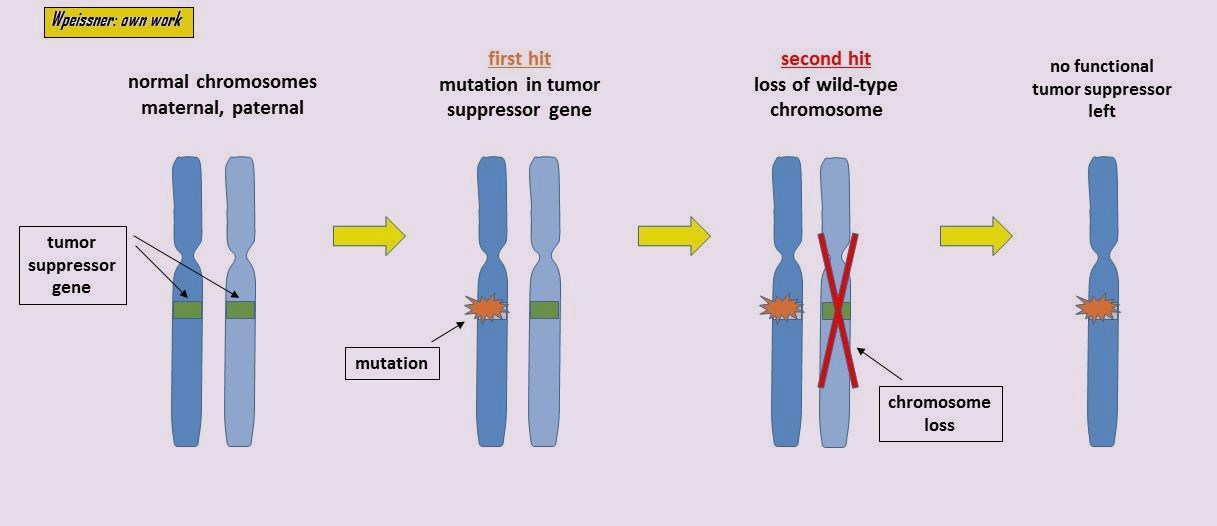
Knudson suggested that multiple “hits” to DNA were necessary to cause cancer. In the children with inherited retinoblastoma, the first insult was inherited in the DNA, and any second insult would rapidly lead to cancer. In non-inherited retinoblastoma, two “hits” had to take place before a tumor could develop, explaining the age difference.

It was later found that:

  • carcinogenesis (development of cancer)
  • depended both on the activation of proto-oncogenes (genes that stimulate cell proliferation) and on the desactivation of tumor suppressor genes (TSG), which are genes that keep proliferation in check.
  • Knudson´s hypothesis refers specifically, however, to the heterozygosity of tumor suppressor genes. A mutation in both alleles is required, as a single functional TSG is usually sufficient.

Tumor suppressor genes act as “brakes” to stop cells before they can travel down the road to cancer. A loss of function mutation in these genes can be disastrous. Some of these genes are involved in DNA repair processes, which help prevent the accumulation of mutations in cancer-related genes. Tumor suppressor genes act as “brakes” to stop cells in their tracks before they can take the road to cancer. Given this situation, loss of tumor suppressor gene function can be disastrous, and it often puts once-normal cells on the fast track to disease.


Knudson hypothesis (The Two-Hit Hypothesis or Multiple-hit hypothesis)

It was first proposed by geneticist Alfred Knudson in 1971. The two-hit hypothesis arose of out Knudson´s interest in the genetic mechanisms underlying retinoblastoma, a childhood form of retinal cancer.

Knudson studied 48 patients with retinoblastoma who had been admitted to the hospital between 1944 and 1969. Suggested that:

  1. An individual could inherit a germ-line mutation but not have disease
  2. While the majority of children with an affected parent had bilateral tumors (25-30%) some had only unilateral tumors (10-15%).


Furthermore, he determined that approximately 60% of retinoblastoma cases in the U.S. were unilateral and were not associated with a family history of the disease.


HEREDITARY:   Bilateral (25-30%), Unilateral (10-15%) : 35-45%

NONHEREDITARY:                             Unilateral (55 -65%): 55-65%

BILATERAL:                                                                                   25-30%

UNILATERAL:                                                                               70-75%


Knudson examined the age at which the children in these two groups were diagnosed with retinoblastoma: without an inherited mutation, the same cell would need to accumulate two mutations- one in each allele of the gene-and this process would be much slower.

The rate of diagnosis for unilateral nonhereditary retinoblastoma was delayed relative to that bilateral cases and showed a curve consistent with a two-mutation process.

Knudson concluded that retinoblastoma was caused by two mutations: one in each copy of a single tumor suppressor gene (RB1). He also estimated that each of the two mutations would occur at a rate of 2 x 10 -7 per year. Patients who inherited an RB1 mutation would develop tumors earlier, inherit a mutation would almost always be affected by a single tumor. This statement, which Knudson called the two-mutation hypothesis, is now known as the two-hit hypothesis.

“Loss of heterozygosity” is often used to describe the process that leads to the inactivation of the second copy of a tumor suppressor gene. A heterozygous cell receives a second hit in its remaining functional copy of the tumor suppressor gene, thereby becoming homozygous for the mutated gene. Mutations that inactivate tumor suppressor genes, called loss-of-function mutations, are often point mutations or small deletions that disrupt the function of the protein that is encoded by the gene; chromosomal deletions or breaks that delete the tumor suppressor gene; or instances of somatic recombination during which the normal gene copy is replaced with a mutant copy.

Knudson developed the two-hit hypothesis long before the human genome was sequenced, and the RB1 gene was itself discovered in 1986. Researches notice that: some cases of retinoblastoma were associated with a deletion of chromosome band 13q14 and then used restriction fragment length polymorphism (RFLP) analysis to isolate the RB1 gene (Friend et al 1986).

RB1 function has been shown to be inactivated by four distinct mechanisms:

  1. Genetic inactivation
  2. Sequestration of the RB1 –encoded protein by viral oncoproteins
  3. Phosphorylation of the RB1 –encoded protein
  4. And degradation of the RB1 –encoded protein


RB1 is one gene among a growing list of tumor suppressor genes. According to the American Cancer Society (2005): at least 30 different tumor suppressor genes have been identified:

  • RB1 Retinoblastoma: cell division, DNA replication, cell death
  • TP53 Li-Fraumeni syndrome (brain tumors, sarcomas, leukemia):cell division, DNA repair, cell death
  • CDKN2A Melanoma: cell division, cell death
  • APC Colorectal cancer (due to familial polyposis): cell division, DNA damage, cell migration, cell adhesion, cell death.
  • MLH1, MSH2, MSH6 Colorectal cancer (without polyposis): DNA mismatch repair, cell cycle regulation
  • BRCA1, BRCA2 Breast and/or ovarian cancer: Repair of double-stranded DNA breaks, cell division, cell death
  • WT1, WT2 Wilm´s tumor: Cell division, transcriptional regulation
  • NF1, NF2 Nerve tumors (including brain): RAS-mediated signal transduction, cell differentiation, cell division, developmental processes.
  • VHL Kidney cancer: Cell division, cell death, cell differentiation, response to cell stress.


Alfred George Knudson, Jr (1922-2016) was an American physician and geneticist specializing in cancer genetics. Knudson was born in Los Angeles, California in 1922, his M.D. from Columbia University in 1947 and his Ph.D. from California Institute of Technology in 1956. From 1970 to 1976, Knudson served as the Dean of Graduate School of Biomedical Sciences, University of Texas Health Science Center at Houston in the Texas Medical Center. He has been affiliated with the Fox Chase Cancer Center in Philadelphia from 1976 until his death in 2016.

Knudson is best known for his “two-hit hypothesis” explaining the incidence of hereditary cancers, such as retinoblastoma.

Our increasing knowledge of tumor suppressor gene function will continue to enhance our ability to diagnose and more effectively treat cancers at the molecular level in the years to come.

Bibliography:

  • Wikipedia
  • American Cancer Society 2005
  • British Journal of Cancer 1953 7, 68–72. doi:10.1038/bjc.1953.8 http://www.bjcancer. com … A New Theory on the Cancer-inducing Mechanism. C O Nordling
  • Nature Publishing Group Knudson, A. “Two genetic hits (more or less) to cancer. Nature Reviews Cancer 1, 160 – 2001.


Relation Links:


Tumor Suppressor Genes (Retinoblastoma and the two hit hypothesis, p


Dr. Al Knudson discusses the «Two-Hit» Theory


Barbara McClintok: regulación de la expresión génica

16 viernes Sep 2016

Posted by José Félix Rodríguez Antón in cáncer, CIENCIA, Genética

≈ Deja un comentario

Etiquetas

Ac, Ds, François Jacob, Jacques Monod, maíz, meiosis, Operon lac, Premio Nobel, transposasa, transposición, transposones

barbara_mcclintock_sello

Barbara McClintok, es una científica en el desarrollo de la genética a la altura de Mendel, nació en Connecticut, Estados Unidos,  en 1902. Recibió el Premio Nobel de Medicina y Biología en 1983, por sus hallazgos sobre la existencia de estructuras móviles en los cromosomas. Las investigaciones fueron llevadas a cabo 30 años antes de recibirlo, trabajó sola y en su época no se daba la importancia que tenían sus observaciones, el premio tuvo un carácter retroactivo de sus aportaciones.

Durante la primera mitad del siglo XX, las investigaciones del papel de los cromosomas y los genes, se llevaron a cabo en plantas y el estudio de la mosca del vinagre.

Entre estos estudios uno de los que más han contribuido al conocimiento actual del cáncer fue la Dra. McClintok: “El ciclo de rotura, fusión y puente” y “las mutaciones de los genes” por la radiación fueron descubiertos en esta época. Durante la época como investigadora de Misuri, continuó la línea de mutagénesis mediante rayos X. Las rupturas producidas en el ADN durante la mitosis, desaparecían  las cromatidas rotas dando lugar a uniones después de la replicación del ADN, durante la inferfase de la siguiente mitosis, repitiéndose el ciclo y causando mutaciones masivas. Este ciclo de ruptura, fusión y formación de puentes cromosómicos demostró:

  1. La unión de cromosomas no es un proceso aleatorio
  2. Descubrió un método para producir mutaciones a gran escala, siendo así objeto de estudio en la investigación del cáncer.

Estas investigaciones abren nuevos campos en la biología y la medicina, en los años sesenta se vieron estructuras genéticas móviles en bacterias.

McClintok  llevó a cabo sus estudios en el maíz, vio que ciertas inestabilidades en las células de este, se debían a estructuras que se desplazaban en un mismo cromosoma. Iniciadora de la cartografía genética en el maíz, describió el primer mapa de ligamiento y puso de relieve el papel de los telómeros y centrómeros.

Su trabajo sobre la regulación génica y los elementos de control era complejo y novedoso en su época. Gracias a la reordenación se consigue la creación de gran cantidad de  anticuerpos por parte de los linfocitos de los vertebrados, en las cadenas pesadas las regiones se reorganizan aleatoriamente, pueden producirse unas 24.000 cadenas pesadas de anticuerpo diferente.

En 1939 fue la primera persona en describir los entrecruzamientos que se producen entre cromosomas homólogos durante la meiosis. En 1931 demostró que hay una relación entre el entrecruzamiento cromosómico meiótico y la recombinación de caracteres heredables. Así la recombinación de cromosomas y el fenotipo resultante daban lugar a la herencia de un nuevo carácter.

En los años cuarenta y cincuenta, descubrió el proceso de transposición de los elementos del genoma y lo empleó para explicar cómo los genes determinan características físicas. Los transposones aparecen en material genético procariota y eucariota, intervienen:

  • Enfermedades infecciosas
  • Resistencia bacteriana a los antibióticos
  • Cáncer
  • DNA Recombinante
  • Inmunología

Entre los años 1948 y 1959, desarrolló una hipótesis que explicaba como los elementos transponibles regulan la acción de los genes inhibiendo o modulándolos. Definió a Ds y Ac como unidades de control o elementos reguladores. La regulación génica puede explicar cómo los organismos multicelulares pueden diversificar las características de cada célula, aún cuando su genoma sea idéntico.   Su trabajo para la época era novedoso, sus contemporáneos mostraron desconfianza a sus descubrimientos.

La importancia de sus investigaciones no se valoraron hasta la década de los años 60 cuando los genetistas franceses François Jacob y Jacques Monod llegan a las mismas conclusiones trabajando con el operon lac. Tras la publicación en 1961 por ellos: “Genetic regulatory mechanisms in the synthesis of proteins” en Journal of Molecular Biology, McClintok escribió un artículo en American Naturalist comparando el funcionamiento del “operon lac” con el sistema Ac/Dc de maíz.

En los años 1970 se clonó Ac y Ds, mostrándose que eran transposones de clase II, Ac es un transposón completo, que codifica en su secuencia una transposasa funcional, lo que permite el movimiento a través del genoma.


Publicaciones importantes:

  • McClintock, Barbara (1929) “A cytological and genetical study of triploid maize”. Genetics 14:180-222
  • Greighton, Harriet B., and McClintok, Barbara (1931) “A Correlation of Cytological and Genetical Crossing-Over in Zea mays”. Proceedings of the National Academy of Scences 17:492-497
  • McClintock, Barbara (1931) “The order of the genes C, Sh, and W x in Zea Mays with reference to a cytologically known point in the chromosome”. Proceedings of the National Academy of Sciences 17:485-91
  • McClintock, Barbara (1941) “The stability of broken ends of chromosomes in Zea Mays”. Genetics 26:234-82
  • McClintock, Barbara (1945) “Neurospora: preliminary observations of the chromosomes of Neurospora crassa”. American Journal of Botany. 32:671-78
  • McClintock, Barbara (1950) “The origin and behavior of mutable loci in maize”. Proceedings of the National Academy of Sciences. 36:344-55
  • McClintock, Barbara (1953) “Induction of instability at selected loci in maize”Genetics 38:579-99
  • McClintock, Barbara (1961) “Some parallels between gene control systems in maize and in bacteria”. American Naturalist 95:265-77
  • McClintock, Barbara; Kato, T.A. & Blumenschein, A. (1981) “Chromosome constitution of races of maize. Its significance in the interpretation of relationships between races and varieties in the Americas”


Genes Mutadores

McClintok descubrió el efecto transponibilidad; unidades podían desplazarse físicamente en su posición dentro del mismo cromosma o también entre cromosomas distintos, llamó a estas unidades “elementos de control”, en unos casos puede actuar sobre sus vecinos genéticos inmediatos, y en otro caso, el elemento de control también puede determinar en qué momento se produce la actividad genética. El elemento de control son genes que regulan la actividad de otros genes a niveles muy básicos, contribuyendo con la mutabilidad. Monroe W. Strickberger


Transposición vía intermediarios de ADN y ARN

Los elementos que se mueven por transposición, se denominan “elementos transponibles” o “transposones”. Se dividen en dos clases generales, dependiendo si se transponen mediante un intermediario de ADN o por un intermediario de ARN.

Las secuencias de inserción se componen solamente del gen de la enzima que participa en la transposición (transposasa) flanqueada por repeticiones invertidas cortas, que son los sitios donde actúa la transposasa. Los transportes complejos se componen de dos secuencias de inserción que flanquean a otros genes, que se mueven como una unidad. Este mecanismo produce la integración de una copia del transposón en una nueva posición del genoma, mientras que la otra copia permanece en su posición original.

Los transposones que se trasladan mediante intermediarios de ADN se encuentran presentes en eucariotas además de en bacterias. El genoma humano contiene 300.000 transposones de ADN, que constituyen el 3% del genoma humano. El movimiento de estos transposones a sitios no específicos del genoma ha jugado un papel fundamental en la evolución estimulando las reorganizaciones de ADN, determinando cambios programados en la expresión génica.

La mayoría de los transposones en las células eucarióticas son “retrotansposones” que se trasladan vía transcripción inversa de intermediarios de ARN.  En el hombre casi hay 3 millones de copias de transposones, constituyendo más del 40% del genoma, la transcripción inversa de intermediarios de ARN, de forma similar a la replicación de los retrovirus. Estos retrotransposones incluyen a las secuencias altamente repetitivas LINE y SINE de los genomas de mamíferos. La Célula. Geoffry M. Cooper & Robert E. Hansman. 


Links relacionados:

  • Barbara McClintok en la Universidad de Cornell

https://www.youtube.com/watch?v=DVi5Xxvlt5Y

  • Transposones

https://www.youtube.com/watch?v=91vR-FKBMT4https://www.youtube.com/watch?v=CroyUMRpbxg

https://www.youtube.com/watch?v=iMJiGfP0QX8


Warburg Effect: metabolism in cancer cells

10 sábado Sep 2016

Posted by José Félix Rodríguez Antón in cáncer, CIENCIA

≈ Deja un comentario

Etiquetas

aerobic glycolysis, apoptosis, cancer cells, Cellular Metabolism, Estrella, Jason W. Locasate, Lewis C. Cantley, mitochondria, Nobel, Oncology, Otto Heinrich Warburg, oxygen, Warburg Effect

ldh_activity-_normal_vs_canceous_cells

Nutrient utilization is dramatically altered when cells receive signals to proliferate. Characteristic metabolic changes enable cells to meet the large biosynthetic demands associated with cell growth and division.

The metabolism of glucose, the central macronutrient, allows for energy to be harnessed in the form of ATP through the oxidation of its carbon bonds. This process is essential for sustaining all mammalian life. In mammals, the end product can be lactate or, upon full oxidation of glucose via respiration in the mitochondria, CO2. In tumors and other proliferating or developing cells, the rate of glucose uptake dramatically increases and lactate is produced, even in the presence of oxygen and fully functioning mitochondria. This process, known as the Warburg Effect  (Jasson W. Locasale).

The Warburg effect is the observation that most cancer cells predominantly produce energy by a high rate of glycolysis followed by lactic acid fermentacion in the cytosol, rather than by a comparatively low rate of glycolysis followed by oxidation of pyruvate in mitochondria as in most normal cells. The latter process is aerobic (uses oxygen). Malignant, rapidly growing tumor cells typically have glycolytic rates up to 200 times higher than those of their normal tissues of origin; this occurs even if oxygen is plentiful.

Otto Warburg postulated this changed in metabolism is the fundamental cause of cancer, Today:Mutations in oncogenes and tumor suppressor genes are thought to be responsible for malignant transformation.

The Warburg effect may simply be a consequence of:

  1. Damage to the mitochondria in cancer
  2. An adaptation to low-oxygen environments within tumors
  3. Result of cancer genes shutting down the mitochondria

Because are involved in the cell´s apoptosis program which would otherwise kill cancerous cells.


Instead of fully respiring in the presence of adequate oxygen, cancer cells ferment. Cancer cells ferment glucose while keeping up the same level of respiration that was present before the process of carcinogenesis, and thus the Warburg effect would be defined as the observation that cancer cells exhibit glycolysis with lactate secretion and mitochondrial respiration even in the presence of oxygen.


Here we propose that the metabolism of cancer cells, and indeed all proliferating cells, is adapted to facilitate the uptake and incorporation of nutrients into the biomass (e.g., nucleotides, amino acids, and lipids) needed to produce a new cell. (Lewis C. Cantley).


In multicellular organisms, most cells are exposed to a constant supply of nutrients. Survival of the organism requires control systems that prevent aberrant individuall cell proliferation when nutrient availability exceeds the levels needed to support cell division.

The Warburg Effect may present an advantage for cell growth in a multicellular environment. Acidification of the microenvironment and other metabolic crosstalk are intrigruing possibilities. Elevated glucose metabolism decreases the pH in the microenvironment drives local invasion (Estrella, V et al, Cancer Res.) An acid-mediated invasion hypothesis suggests that H+ ions secreted from cancer cells diffuse into the surrounding environment and alter the tumor-stroma interface, allowing for enhanced invasiveness .


Warburg´s  hypothesis was postulated by the Nobel laureate Otto Heinrich Warburg in 1924.Warburg reported a fundamental difference between normal and cancerous cells to be the ratio of glycolysis to respiration; this observation is also known as the Warburg effect.

Warburg articulated his hypothesis in a paper entitled “The Prime Cause and Prevention of Cancer”, which he presented in lecture at the meeting of the Nobel-Laureates on June 30, 1966 (Lake Constance).

Was a German physiologist, medical doctor. He served as an officer in the elite Uhlan during the First World War, and was awarded the Iron Cross for bravery. Earned his Doctor of Chemistry in Berlin in 1906.

Studies published since 2005 have shown that the Warburg effect, indeed, might lead to a promising approach in the treatment of solid tumors.


Besides promising human research at :

  • the Deparment of Medicine, University of Alberta led by Dr. Evangelos Michelakis other glycotic inhibitors besides DCA that hold promise include Bromopyruvic being researched
  • University of Texas, M.D. Anderson Cancer Center, 2-deoxyglucose (2-DG)
  • Emory University School of Medicine, and lactate dehydrogensase A
  • Johns Hopkins University School of Medicine


Links:

  • Otto Warburg-Nobelprize.org

http://www.nobelprize.org/nobel_prizes/medicine/laureates/1931/warburg-bio.html 

  • Otto Warburg effect

https://www.youtube.com/watch?v=ZVNs1aOKHw8

P53: star of genes

26 viernes Ago 2016

Posted by José Félix Rodríguez Antón in cáncer, CIENCIA

≈ 1 comentario

Etiquetas

Biology, DNA, Genome, Manuel Serrano, Medical Research, Medicine, mutation, Scientific investigation, suppressor gene, tumor, tumor suppressor

P53_pathways

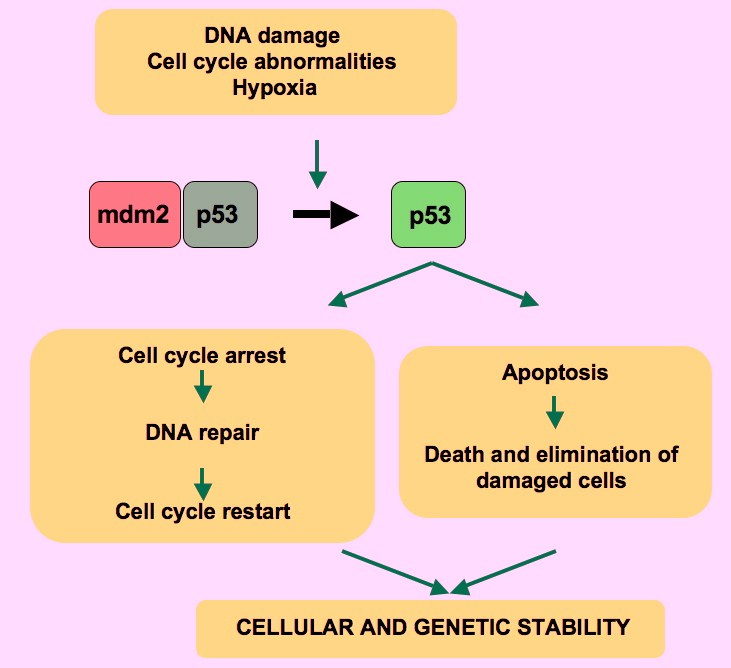
Is called “guardian” or “police”, because any alteration that is in the cell, and there are many cancer associated, activates it. Crucial in preventing cancer, p53 is an anticancer gene that under normal circumstances we defend the disease. P53 blocks or kills the altered cell, prevents their proliferation or cell division (cell suicide) or because maintains blocked without leaving reproduce. Is a gene that is activated only in stressful situations, when there is damage in a cell is a detector of dangerous situations, a sensor.


So that there is a cancer p53 has to be inactive, and is at 55% of the most common cancers:

  • Breast
  • Lung
  • Bladder
  • Lymphoma
  • Ovarian
  • Esophageal
  • Colorectal
  • Head and neck
  • Sarcomas


Researcher Manuel Serrano, head of the group of tumor suppression National Cancer Research Centre (CNIO) who has worked in p53 said: “It is a key gene, so is the star of gene” it is simple: p53 is key,   because it is the gene most frequently mutated in cancer.


Tumor protein p53 also known as:

  • P53
  • Cellular tumor antigen p53
  • Phosphoprotein p53
  • Tumor suppressor p53
  • Antigen NY-CO-13
  • Transformation-related protein 53 (TRP53)

The name p53 was given in 1979 describing the apparent molecular mass: SDS-PAG analysis indicates that it is a 53-kilodalton (kDa) protein. All these p53 proteins are called the p53 isoforms (from Wikipedia).

  • It is a suppressor gene located on the short arm of chromosome 17 band 13, and encodes a nuclear protein of 53 Kd. P53 function in normal state is to regulating the cell cycle to DNA damage, which has been called “guardian of the genome”
  • Is a DNA-binding protein which belongs to the p53 family. It contains transcription activation, DNA-binding, and oligomerization domains. Activation of p53 begins through a number of mechanisms including phosphorylation by ATM, ATR, Chk1 and MAPKs.


  • When DNA is damage: the human body is always exposed to external damage, in addition to the endogenous – in our cells there are sometimes mistakes accidentals- is good to know if external agents such:
  • Alcohol
  • Snuff
  • Insecticides
  • Industrial pollution
  • Solar radiation
  • Ultraviolet radiation

Have been incriminated as potential mutagens p53.


  • P53 accumulates in the nucleus, and is able to stop the cell cycle in G1 (check point) before doubling the DNA and initiate repair. P53 will induce synthesis inhibiting proteins cyclin-CDKs complex, blocking the cell cycle.


  • If the injury is repaired the cycle continues, but if not repaired cell apoptosis is induced by gene expression as bax. Altering the P53 protein causes genomic instability, where cells unable to prevent proliferation and trigger apoptosis when DNA integrity, so that they are able to accumulate mutations to complete carcinogenesis is committed. (from BioCancer Research Journal).


Related Links p53:

  • Genecards  
  •    http://www.genecards.org/cgi-bin/carddisp.pl?gene=TP53#/
  • Nature  
  •   http://www.nature.com/scitable/topicpage/p53-the-most-frequently-altered-gene-in-14192717
  • You tube
  • https://www.youtube.com/watch?v=K79fWVwELR0


Entradas recientes →

Estadísticas del sitio

  • 361.861 hits

Introduce tu correo electrónico para suscribirte a este blog y recibir avisos de nuevas entradas.

Únete a otros 205 suscriptores

Entradas recientes

  • BRIGADA AL SALVADOR
  • Consideraciones a la 4ª Brigada Urológica a Oaxaca (México) (diciembre-2023)
  • Proyecto M2: Telescopio Euclid
  • “San Alonso de Orozco: culto, historia y arte”
  • Comunicación de la obra pictórica: galerías, exposiciones y redes sociales
enero 2026
S D L M X J V
 12
3456789
10111213141516
17181920212223
24252627282930
31  
« May    

Categorías

Estadísticas del sitio

  • 361.861 hits

Entradas recientes

  • BRIGADA AL SALVADOR
  • Consideraciones a la 4ª Brigada Urológica a Oaxaca (México) (diciembre-2023)
  • Proyecto M2: Telescopio Euclid
  • “San Alonso de Orozco: culto, historia y arte”
  • Comunicación de la obra pictórica: galerías, exposiciones y redes sociales

Enter your email address to follow this blog and receive notifications of new posts by email.

enero 2026
S D L M X J V
 12
3456789
10111213141516
17181920212223
24252627282930
31  
« May    

Páginas

  • Perfil

Categorías

Meta

  • Crear cuenta
  • Iniciar sesión
  • Feed de entradas
  • Feed de comentarios
  • WordPress.com

Blog de WordPress.com.

Privacidad y cookies: este sitio utiliza cookies. Al continuar utilizando esta web, aceptas su uso.
Para obtener más información, incluido cómo controlar las cookies, consulta aquí: Política de cookies
  • Suscribirse Suscrito
    • Blog de José Félix Rodríguez Antón
    • Únete a otros 205 suscriptores
    • ¿Ya tienes una cuenta de WordPress.com? Inicia sesión.
    • Blog de José Félix Rodríguez Antón
    • Suscribirse Suscrito
    • Regístrate
    • Iniciar sesión
    • Denunciar este contenido
    • Ver el sitio en el Lector
    • Gestionar las suscripciones
    • Contraer esta barra
 

Cargando comentarios...