• Perfil

Blog de José Félix Rodríguez Antón

~ conocimiento de las cosas

Blog de José Félix Rodríguez Antón

Publicaciones de la categoría: Geofisica

Livingstone el Doctor que se hizo aventurero

16 domingo Sep 2018

Posted by José Félix Rodríguez Antón in CIENCIA, Geofisica

≈ Deja un comentario

Etiquetas

África, cartografía, cataratas Victoria, desierto Kalahari, Royal Geographical Society

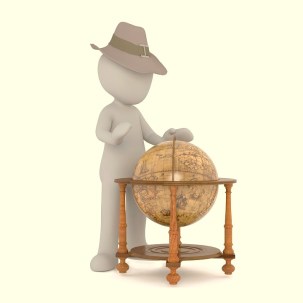
livingstone comic

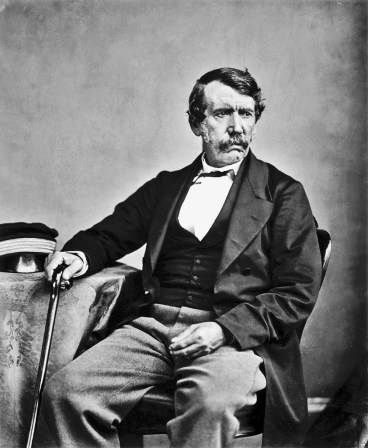
El Dr. Livingstone (1813-1873) procede de una familia humilde de escoceses, recorrió más de 47.000 kilómetros; el imperio británico, vivía en esos momentos una expansión. Tuvo una infancia difícil trabajando en una fábrica a los diez años doce horas al día, para acabar siendo un héroe nacional.

 
Logró matricularse en Charing Cross Hospital Medicar School de 1838-40. Mientras hacía sus estudios de medicina, entró en la Sociedad Misionera Londinense como misionero en entrenamiento.


David_Livingstone_-1

 
En 1840 fue enviado de misión a África, tenía que haber ido a China, pero estalló la guerra del Opio. Uno de los mayores exploradores: desarrolló la cartografía africana y realizó informes de botánica, geología y zoología. También luchó contra la esclavitud desde un punto de vista cristiano.

 
En 1848 inicia su primera expedición, fue de los primeros europeos en atravesar el desierto Kalahari, descubrió el lago Ngami y llegó al río Zambeze.

 
Entre 1852 y 1856 emprendió una segunda expedición para encontrar rutas comerciales y materias primas. Inició un viaje desde el océano Atlántico hasta el Índico. Descubrió en 1855 las cataratas Victoria.

 
Durante la tercera expedición buscó las fuentes del Nilo, encontrando la cabecera del río Congo.

 
En 1865 la Royal Geographical Society le encarga buscar el nacimiento del Nilo, esta nueva expedición se inició en marzo de 1866.

 
Falleció en 1873, a causa de la malaria y de una hemorragia interna producida por disentería. Fue enterrado en la Abadía de Westminster.


Narró sus viajes por el continente africano en “Viajes y exploraciones en el África del Sur”.


Bibliografía:

 
• Livingstone, David; “Viajes y exploraciones en el África del Sur”
Ed. Del Viento. La Coruña. 2008

 
• Desborough Cooley, William; Livingstone, David
“Dr. Livingstone and the Royal Geographical Society”
British Library, Historical Print Editions, 2011


• Richard, Burton; “Las Montañas de La Luna, (en busca de las Fuentes del Nilo)
Ed. Valdemar, 2011


• Wikipedia

 
Links relacionados:


• Livingstone, Universidad de Glasgow
https://www.universitystory.gla.ac.uk/biography/?id=WH0220&type=P


• Livingstone, RTVE
http://blog.rtve.es/somosdocumentales/2016/02/el-diario-perdido-del-dr-livingstone-este-mi%C3%A9rcoles-en-documenta2.html


• Livingstone, National Geographyc
https://www.nationalgeographic.com.es/viajes/actualidad/bicentenario-david-livingstone_7130/1

Ecología de los pastizales Mediterráneos: “La oveja bombero”

27 domingo May 2018

Posted by José Félix Rodríguez Antón in CIENCIA, Geofisica

≈ Deja un comentario

Etiquetas

Ecología, FAO, incendio, inventario pastoral, pastizal, raza ovina

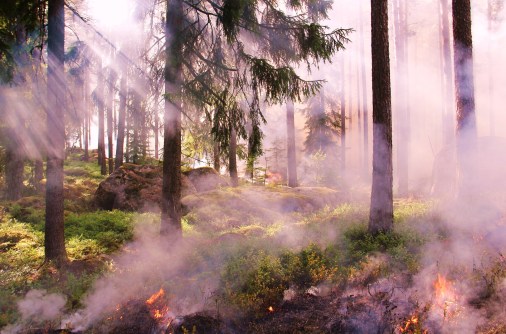
ovejas bombero

Varios países en el área mediterránea están utilizando la metodología, conocida popularmente como “ovejas bombero”: actividad preventiva de incendios: comer rastrojos, hierba, plantas leñosas como el tojo o la maleza y evitar que ardan y que haya incendios manteniendo limpios los montes.
Las razas autóctonas en la cuenca del Mediterráneo:
• Francia: Rambouillet, Ille France, Lacaune
• España: Manchega, Churra, Merina, Latxa
• Italia: Sarda, Préalpes
• Grecia: Chios
• Israel: Awassi, Assaf


incendio

 
El promedio anual de incendios forestales en toda la cuenca del Mediterráneo (23 países) se aproxima a 50.000, la superficie anual quemada se estima en 600.000 ha. El costo total de los dispositivos de lucha contraincendios y seguridad en la región supera los 1.000 millones de dólares. Los países donde hay un gran aumento: España, Italia, Grecia, Marruecos y Turquía. Produciéndose daños económicos, ecológicos e incluso vidas humanas.

 
La composición de los bosques se ha estabilizado con especies vegetales que necesitan el fuego en su ciclo reproductivo: Pinares en ambas orillas del Mediterráneo.
• Pino carrasco (Pinus halepensis): España, Francia, Italia, Grecia, Turquía, Marruecos, Argelia y Túnez.
• Pino piñonero (P. pinea), pinaster (P. pinaster), laricio (P. nigra) cuenca occidental.
• Pino brutia cuenca oriental.


La mayor parte de los incendios son de origen humano (hornos de carbón vegetal, quemas, fumadores, campamentos), frente a los de origen natural (rayos, etc.…). Una causa importante son los pastores que prenden bosques y pastizales porque generan brotes para los animales. También los agricultores para deshacerse de restos de su cosecha o para ganar terreno al bosque.

 
Las ventajas del pastoreo:
• evita proliferación incontrolada de material combustible
• aporta carne de calidad en el ganado
• fertiliza los suelos, aumenta la biodiversidad de flora y fauna: diseminando las semillas y manteniendo el hábitat despejado, donde se refugia la fauna silvestre.
• Fijación de la población al medio rural

 
“Inventario Pastoral” es la recogida de información, para tomar decisiones sobre carga de zona, animales y organización del pastoreo; teniendo en cuenta el suelo, las plantas y los animales.

 
El grupo de trabajo sobre incendios forestales de Silva Mediterránea propone acordar con FAO programas de refuerzo en materia de prevención.


Bibliografía:

• Ricardo Velez Muñoz. “Los incendios forestales en el mediterráneo: Perspectiva regional”Unasylva. Ministerio de Agricultura y Pesca, Alimentación y Medio Ambiente.1990

http://www.fao.org/docrep/t9500s/t9500s02.htm


• Daniel Alexandrian, François Esnault, Giancarlo Calbri; “Incendios forestales en el área del Mediterráneo”. FAO. Roma. 1998
http://www.fao.org/docrep/x1880s/x1880s07.htm


• Agrodigital.com “La oveja bombero, la nueva ayuda al ovino en Castilla-La Mancha”. 2018

La «oveja bombera», la nueva ayuda al ovino en Castilla-La Mancha


• González Rebollar, J. L. et al; “Evaluación de la capacidad sustentadora en pastos semiáridos del sudeste ibérico”, 1993 Ministerio de Agricultura y Pesca, Alimentación y Medio Ambiente

Haz clic para acceder a 0904712280144d9b_tcm30-152587.pdf


Links relacionados:

• Acciones de extinción de los incendios forestales. Ministerio de Agricultura y Pesca, Alimentación y Medio Ambiente
http://www.mapama.gob.es/es/desarrollo-rural/temas/politica-forestal/incendios-forestales/extincion/


• Estadísticas de los incendios forestales. Ministerio de Agricultura y Pesca, Alimentación y Medio Ambiente
http://www.mapama.gob.es/es/desarrollo-rural/estadisticas/Incendios_default.aspx


• Raza Ovina Manchega. Ministerio de Agricultura y Pesca, Alimentación y Medio Ambiente
http://www.mapama.gob.es/es/ganaderia/temas/zootecnia/razas- ganaderas/razas/catalogo/autoctona-fomento/ovino/manchega/default.aspx


• Raza Ovina Castellana. Ministerio de Agricultura y Pesca, Alimentación y Medio Ambiente
http://www.mapama.gob.es/es/ganaderia/temas/zootecnia/razas-ganaderas/razas/catalogo/autoctona-fomento/ovino/castellana/default.aspx


• CSIC. Instituto Pirenaico de Ecología.
http://www.ipe.csic.es/presentacion-general?p_p_id=3&p_p_lifecycle=0&p_p_state=maximized&p_p_mode=view&_3_struts_action=%2Fsearch%2Fsearch


• APAF-Madrid (Asociación Profesional de Agentes Forestales de la Comunidad de Madrid)
http://www.agentesforestales.org/noticias-50/comunidad-de-madrid/845-ovejas-vacas-cabras-antiincendiosas, vacas y cabras antiincendios


Climate change

13 domingo Nov 2016

Posted by José Félix Rodríguez Antón in CIENCIA, Geofisica

≈ Deja un comentario

Etiquetas

Carbon cycle, climate change, dendroclimatology, Feedbacks, forcing mechanisms, greenhouse effect, Milankovitch cycles

climate-change

Climate changes prior to the Industrial Revolution in the 1700s can be explained by natural causes, such as changes in solar energy, volcanic eruptions, and natural changes in greenhouse gas (GHG) concentrations. Recent climate changes, cannot be explained by natural causes alone. It is especially warming since the mid-20th century. It is extremely likely that human activities have been the dominant cause of that warming.

Earth´s temperature depends on the balance between energy entering and leaving the planet´s system. When incoming energy from the sun is absorbed by the Earth system, Earth warms. When the sun´s energy is reflected back into space, Earth avoids warming. When absorbed energy is released back into space, Earth cools.

Many factors, both natural and human, can cause changes in Earth´s energy balance, including:

  • Variations in the sun´s energy reaching Earth
  • Changes in the reflectivity of Earth´s atmosphere and surface
  • Changes in the greenhouse effect, which affects the amount of heat reained by Earth´s atmosphere.

Climate change is a change in the statistical distribution of weather patterns when that change lasts for an extended period of time: decades to millions of years.

Climate change is caused by:

  • factors such as biotic processes, variations in solar radiation received by Earth,plate tectonics, and volcanic eruptions

  • certain human activities have also been identified as significant causes of recent climate change, often referred to as global warming.

Are used observations and theoretical models, based on geological evidence from:

  • Borehole temperature profiles

  • Cores removed from deep accumulations of ice, floral and faunal records

  • Glacial and periglacial processes

  • Stable-isotope and other analysis of sediment layers

  • Records of past sea levels

PHYSICAL EVIDENCE

  • Historical and archaeological evidence: oral history and historical documents can offer insights into past changes in the climate. Climate change effects have been linked to the collapse of various civilizations.
  • Glaciers: are considered among the most sensitive indicators of climate change. Their size is determinate by a mass balance between snow input and melt output. As temperature warm, glaciers retreat unless snow precipitation increases to make up for the additional melt. The most significant climate processes since the middle to late Pliocene are the glacial and interglacial cycles. The present interglacial period has lasted about 11.700 years.
  • Arctic sea ice loss: Satellite observations show that Arctic sea ice is now declining at a rate of 13.3 percent per decade, relative to the 1891 to 2010 average.
  • Vegetation: a change in the type, distribution and coverage of vegetation may occur given a change in the climate. Some changes in climate may result in increases precipitation and warmth. Vegetation stress, rapid plant loss and desertification in certain circumstances are radical changes.
  • Pollen analysis: different groups of plants have pollen with distinctive shapes and surface textures. Changes in the type of pollen found in different layers of sediment in lakes, bogs, or river deltas indicate changes in plant communities.
  • Cloud cover and precipitation: scientists have plublished evidence o increased cloud cover over polar regions, as predicted by climate models. Estimated global land precipitation increases by approximately 2% over the course of the 20th century.
  • Dendroclimatology: is the analysis of tree ring growth patterns to determine past climate variations.
  • Ice cores: The air trapped in bubbles in the ice can also reveal the CO2 variations o the atmosphere from the distant past, well before modern environmental influences. The changes in CO2 over may millennia, and continues to provide valuable information about the differences between ancient and modern atmospheric conditions.
  • Animals: different species o beetles tend to be found under different climatic conditions. Knowledge of the present climatic range of the different species, and the age of the sediments in which remains are found, past climatic conditions may be inferred.
  • Sea level change: in the early Pliocene, global temperatures were 1-2ºC warmer than the present temperature, yet sea level was 15-25 meters higher than today.

CAUSES

Energy is received from the Sun the rate at which it is lost to space determine equilibrium temperature and climate of Earth. This energy is distributed around the globe by winds, ocean currents, and other mechanisms to affect the climates of different regions.

Forcing mechanisms can be “internal” o “external”. Internal forcing mechanisms are natural processes within the climate system itself. External forcing mechanisms can be natural or anthropogenic.

        1.  Internal forcing mechanisms: scientists generally define the five components of earth´s climate system to include atmosphere, hydrosphere, cryosphere, lithosphere and biosphere.

Ocean variability: the ocean is a fundamental part of the climate system, some changes in it occurring at longer timescales than in the atmosphere, as it has hundreds of times more mass and thus very high thermal inertia. Short-term fluctuations such as the Niño-Southern Oscillation, the Pacific decadal oscillation, the North Atlantic oscillation, and the Arctic oscillation, represent climate variability rather than climate change. On longer time-scales, alterations to ocean processes such as thermohaline circulation play a key role in redistributing heat by carrying out a very slow and extremely deep movement of water and the long-term redistribution of heat in the world´s oceans.

Life: affects climate through its role in the carbon and water cycles and through such mechanisms as albedo, evapotranspiration, cloud formation, and weathering.

  1. External forcing mechanisms:

Orbital variations: variations in Earth´s orbit lead to changes in the seasonal distribution of sunlight reaching the Earth´s surface and how it is distributed across the globe. The three types of orbital variations are variations in Earth´s eccentricity;

    • Changes in the tilt angle o Earth´s axis of rotation

    • Precession of Earth´s axis

Combined together, these produce Milankovitch cycles, which have a large impact on climate and are notable por their correlation to glacial and interglacial periods.

Solar output: variations in solar activity during the last several centuries based on observations o sunspots and beryllium isotopes. Three to our billion years ago, the Sun emitted only 70% as much power as it does today. Over the following approximately 4 billion years, the energy output of the Sun increases and atmospheric composition changed. The Great Oxygenation Event-oxygenation of the atmosphere around 2.4 billion years ago.

Volcanism: the eruptions considered to be large enough to affect the Earth´s climate on a scale of more than I year the ones that inject over 100.000 tons of SO2, into the stratosphere (sulfuric acid), causing cooling, blocking the transmission of solar radiation to the Earth´s surface for a period o a few years. Volcanoes are also part of carbon cycle. Over very long time periods, they release carbon dioxide from the Earth´s crust and mantle, counteracting the uptake by sedimentary rocks and other geological carbon dioxide sinks.

Plate tectonics: the motion o tectonic plates reconfigures global land and ocean areas and generates topography. The position of the continents determines the geometry of the oceans and therefore influences patterns of ocean circulation. The size of continents is also important. Because of the stabilizing effect of the oceans on temperature, yearly temperature variations are generally lower in coastal areas than they are inland. A larger supercontinent will therefore have more area in which climate is strongly seasonal than will several smaller continents or islands.

Human influences: in the context of climate variation, anthropogenic factors are human activities which affect the climate. The scientific consensus on climate change is “that climate is changing and these changes are in large part caused by human activities. Of most concern in these anthropogenic factors are:

  • Increase in CO2 levels due to emissions from fossil fuel combustion
  • Aerosols

  • CO2 from cement manufacture

  • Ozone depletion

  • Animal agriculture and deforestation.

Radiative Forcing: is a measure of the influence of a particular factor on the net change in Earth´s energy balance. On average, a positive radiative forcing tends to warm the surface of the planet, while a negative forcing tends to cool the surface. GHGs have a positive forcing because they absorb energy radiating from Earth´s surface, rather than allowing it to be directly transmitted into space. Aerosols, can have a positive or negative radiative forcing, depending on how they absorb and emit heat or reflect light. GHGs has increased between 1990 and 2009 a 27,5%, carbon dioxide (CO2) is responsible for 80%., also there are contribution of metano (CH4) and chlorofluorocarbons (CFCs).

The greenhouse effect: greenhouse gases like water vapor (H2O), carbon dioxide (CO2), and methane (CH4), absorb energy, slowing or preventing the loss of heat to space. GHGs act like a blanket, making Earth warmer than it would otherwise be.

Since the Industrial Revolution began around 1750, human activities have contributed substantially to climate change by adding CO2, and other heat-trapping gases to the atmosphere. These greenhouse gas emissions have increased the greenhouse effect and caused Earth´s surface temperature to rise. The most important GHGs directly emitted by humans include carbon dioxide (CO2), methane (CH4), nitrous oxide (N20), and several others.

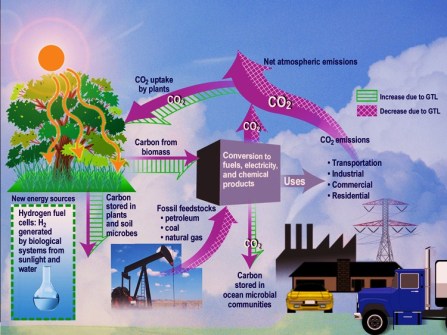
Carbon dioxide is the primary greenhouse gas that is contributing to recent climate change. CO2 is absorbed and emitted naturally as part of the carbon cycle: most of the chemicals that make up living tissue contain carbon. Carbon enters atmosphere as carbon dioxide from respiration and combustion. Carbon dioxide is absorved by producers to make carbohydrates in photosynthesis.

Respiration CH2O + O2—————CO2 + H20

Photosynthesis CO2 + H2O + LUZ—CH2O + O2

Animals feed on the plant passing the carbon compounds along the food chain. Most of the carbon they consume is exhaled as carbon dioxide formed during respiration. The animals and plants eventually die, carbon in their bodies is returned to the atmosphere as carbon dioxide. When descomposition is blocked. The plant and animal material may then be available as fossil fuel in the future combustion.

Feedbacks: climate feedbacks amplify o reduce direct warming and cooling effects. Positive feedbacks that amplify changes, feedbacks that counteract changes are called negative feedbacks; feedbacks are associated with changes in surface reflectivity, clouds, water vapor, and the carbon cycle. The melting of Arctic sea ice is another example of a positive climate feedback. Some types of clouds cause a negative feedback (warming temperatures can increase the amount or reflectivity of these clouds, reflecting more sunlight back into space, cooling the surface of the planet). Other types of clouds, however, contribute a positive feedback.

Bibliography:

  • Wikipedia

  • NASA, “Climate change and global warming”
  • Arthur N. Strahler (1970), “Physical geography”, Ed. Jhon Wikey and Sons. INC
  • America´s Climate Choices (2010), “Advancing the Science of Climate Change”, Washington, D.C.: The National Academies Press.
  • Katie Peek (2016), “How will Climate change us”, September Scientific American

Relation links:

  • NASA

http://www.nasa.gov/press-release/nasa-releases-detailed-global-climate-change-projections/

  • CSIC

http://digital.csic.es/handle/10261/33470

  • Greenpeace

    http://www.greenpeace.org/eu-unit/en/campaigns/Climate/

    .

Sistemas de Referencia y Leyes Físicas

27 sábado Abr 2013

Posted by José Félix Rodríguez Antón in CIENCIA, Geofisica

≈ Deja un comentario

Etiquetas

Albert Einstein, espacio-tiempo, Jöel Scherk, Jhon Schwarz, mecánica clásica, Newton, relatividad especial, relatividad general, sistema de referencia, Teoría de las cuerdas, Teoría de las supercuerdas, Teoría M

IMG_0737

Es necesario creer en fuerzas que regulan las Leyes de los cuerpos en el Universo. No las vemos pero nos afectan en nuestro día a día.

En la VIDA COTIDIANA (comunicaciones por satélite, energía atómica,FILOSOFÍA (filosofía de la  Ciencia, “principio de incertidumbre”), en el ARTE (Salvador Dali, distorsión y dilatación temporal; Pablo Picasso, el cubismo).

Newton (1680-89) buscaba la explicación del movimiento de los cuerpos en el Universo:

  • tamaño
  • distancia
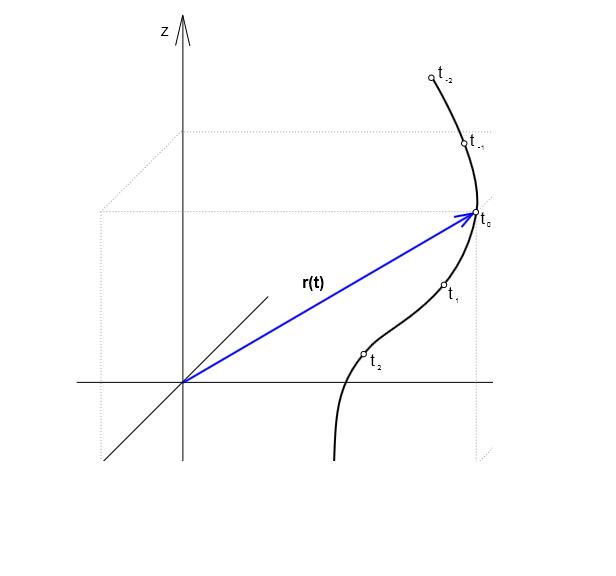
  • posiciones cuando el espacio y el tiempo son constantes.mmecanica clasica

Explica la leyes del comportamiento de los cuerpos físicos en reposo y a velocidad pequeñas en comparación con la velocidad de la luz:

V= gxt         V= velocidad

t=  tiempo

g= aceleración gravedad (9,81 m/s2)

lo que cuenta es la velocidad con respecto a un observador.

Explica la existencia de una fuerza: la GRAVEDAD que surge entre dos cuerpos por el hecho de tener una masa determinada.

Para medir la posición del cuerpo, Newton usaba “el sistema de referencia”, aceptado durante el siglo XVII, XVIII y XIX hasta principios del siglo XX.

La Ley de Propagación de la luz es una Ley Universal, cierta en todos los sistemas de referencia  C= 300.000 km/seg.

Einstein estudió como la velocidad de la luz se relaciona con:

  • tiempo
  • distancia
  • masas (Formulas de Lorentz),cuando la velocidad es constante,si el sistema de referencia se mueve más rápidamente, aumenta la VELOCIDAD
  • aumenta la MASA hasta hacerse infinita cerca de la velocidad de la luz
  • se dilata el TIEMPO, se hace más lento, a medida que aumenta la velocidad de la luz
  • los objetos se ACORTAN en la dirección del movimiento hasta hacerse nula cerca de la velocidad de la luz.

intenta explicar como las velocidades varían de una observador a otro. Fenómenos simultáneos cuando se observan desde distintos sistemas de referencia, no son iguales al ser medidos desde otro sistema. Todo Sistema de Referencia tiene un tiempo particular.

Así estos cambios solo se notan a grandes velocidades, observadas en partículas subatómicas.

A velocidades corrientes predomina la mecánica clásica de Newton.

Siguiendo el estudio del movimiento, determinó que es una forma de energía, la masa es energía

E= MC2          E= energía

M= masa del cuerpo

C= velocidad de la luz al cuadrado

“la energía contenida en cualquier partícula es igual a la masa por el cuadrado de la velocidad de la luz”

Einstein en 1905 pretende resolver la incompatibilidad de la mecánica newtoniana y el electro

magnetismo describe la física del movimiento de  los cuerpos en un plano espacio-tiempo y ausencia de fuerza gravitatoria, Teoría de la Relatividad Especial.

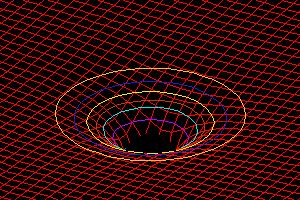
Posteriormente en 1915 con la Teoría de la Relatividad General, reemplaza a la gravedad newtoniana, coincidiendo cuando los campos gravitatorios son débiles. La geometría del Universo:espacio-tiempo se ve afectado por la materia: teoría relativista del campo gravitatorio.rrelatividad general

El espacio tiempo no es plano, en presencia de materia, la curva espacio tiempo es percibida como un campo gravitatorio.

Hasta llegar a la Teoría de las Cuerdas (Jöel Scherk, John Schwarz, 1974) donde se concibe el Espacio de 11 dimensiones:

  • 3 espacio
  • 1 tiempo
  • 6 adicionales reseteadas o compactadas
  • 1 engloba: membranas

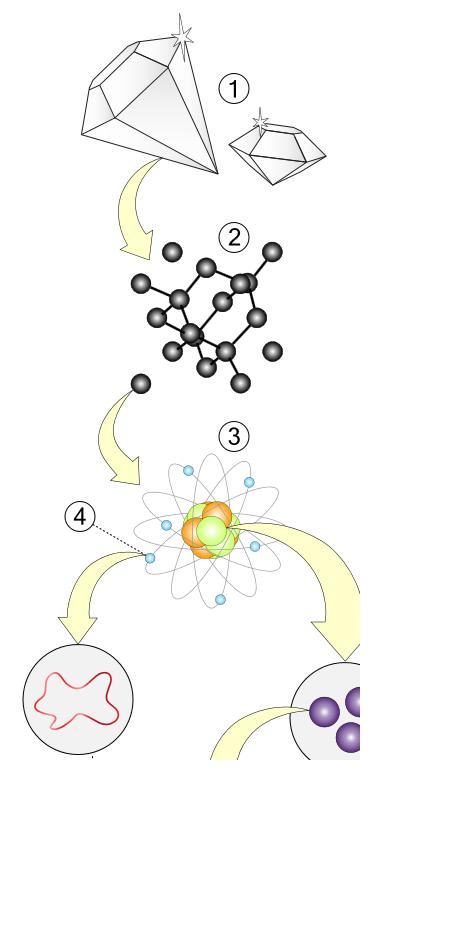
tteoria de las cuerdas

las partículas materiales, son “estados vibracionales” de un objeto llamado “cuerda” o “filamento”. Así un electrón no es un punto, no es una estructura interna de dimensión cero, sino un amasijo de cuerdas minúsculas que vibran en un espacio-tiempo de más de cuatro dimensiones.

La organización del Universo es en esferas o membranas, sin fin pero con un orden subyacente.

Contiene objetos de mayor como de menor dimensión:

  • P-branas
  • D-branas

Esta teoría junto con la Teoría de las supercuerdas o Teoría M (1984):

teoría cuerdas Tipo I

teoría cuerdas Tipo II A

teoría cuerdas Tipo II B

teoría de cuerda heterótica SO (32)

teoría de cuerda heterótica E8 x E8

se alejan de la concepción punto-partícula.

Estas teorías son  muy predictivas, explican  propiedades de la naturaleza, pero lejos de ser provadas experimentalmente.

Esta noche cambian la hora: LAS 03:00 son las 02:00

27 sábado Oct 2012

Posted by José Félix Rodríguez Antón in Geofisica

≈ 1 comentario

Acaba el horario de verano y el domingo a las 03:00 horas vuelven a ser las 02:00, repitiendose esa hora, asi este sabado tiene 25 horas «HORA DE APROVECHAMIENTO DE LUZ DIURNA». Los cambios de hora se hacen los fines de semana porque hay menos desajustes. Las horas se establecen de forma racional, a partir del meridiano de Greenwich (Inglaterra), son como una jaula esférica que encierra el globo, estando sujeto por los polos. Al retrasar el horario se incrementa el empleo de luz artificial por la mañana y se reduce por la tarde.

El horario «moderno» fue propuesto por Benjamin FRANKLIN, quien publicó una carta en 1784, en el «Économie» del diario Journal de Paris, donde comentaba como los parisinos ahorraban velas levantándose más temprano, empleando más luz solar: «Early to bed and early to rises/ Makes a man healthy, wealthy an wise».

En la medida que la comunicación entre las poblaciones aumento con el ferrocarril y las nuevas vías de comunicación fue necasario unificar horarios.

Posteriormente en 1907, William WILLET, ya pensó en un «horario de verano» al tener que acortar su recorrido de golf con la puesta de sol.

Pero el cambio horario se usó implantado en 1916 durante la Primera Guerra Mundial, para ahorrar carbón y aliviar los apagones nocturnos para dificultar los bombardeos. Así Alemania, sus aliados y las zonas ocupadas iniciaron la implantación, seguidos por el Reino Unido, Rusia y Estados Unidos en 1918. Durante la Segunda Guerra Mundial, desde 1942 hasta 1945 tambien se cambio el horario: «HORA OFICIAL DE GUERRA».

En abril de 1966 el Congreso de los EE.UU aprobó el «Decreto del Tiempo Uniforme» definiendo en cada estado el periodo de aprovechamiento de luz diurna.

El cambio de horario tiene EFECTOS POSITIVOS sobre el ahorro, el sector del transporte, las comunicaciones, la seguridad vial, los modos de vida, turismo, etc… Al haber más luz por la tarde se benefician los comercios para «ir de compras» y tambien los ciudadanos con mas luz  para «hacer deporte». Tambien de forma indirecta nos acordamos de: cuidar las calderas de la calefacción, mirar el estado de las luches de los coches pasando la ITV y programar los termostatos para el invierno. En sentido más tedioso tenemos que cambiar la hora de los relojes y en los hospitales tienen que reprogramar los dispositivos médicos.

Los relojes de los ordenadores, cambian de forma automática, lo cual siempre es de agradecer. Los dos sistemas que usan es el ZONEINFO (Unix, Java Oracle) y MICROSOFT WINDOWS(Vista, Windows 7).

Nuestro organismo tambien se adapta, regulado por los NUCLEOS SUPRAQUIASMÁTICOS (SCN) donde los «genes cronómetro» producen proteinas hasta alcanzar un nivel, que se van degradando durante el día, y comienzan a producirse al día siguiente manteniendo los «ritmos circadianos».

Entradas recientes →

Estadísticas del sitio

  • 361.552 hits

Introduce tu correo electrónico para suscribirte a este blog y recibir avisos de nuevas entradas.

Únete a otros 205 suscriptores

Entradas recientes

  • BRIGADA AL SALVADOR
  • Consideraciones a la 4ª Brigada Urológica a Oaxaca (México) (diciembre-2023)
  • Proyecto M2: Telescopio Euclid
  • “San Alonso de Orozco: culto, historia y arte”
  • Comunicación de la obra pictórica: galerías, exposiciones y redes sociales
diciembre 2025
S D L M X J V
 12345
6789101112
13141516171819
20212223242526
2728293031  
« May    

Categorías

Estadísticas del sitio

  • 361.552 hits

Entradas recientes

  • BRIGADA AL SALVADOR
  • Consideraciones a la 4ª Brigada Urológica a Oaxaca (México) (diciembre-2023)
  • Proyecto M2: Telescopio Euclid
  • “San Alonso de Orozco: culto, historia y arte”
  • Comunicación de la obra pictórica: galerías, exposiciones y redes sociales

Enter your email address to follow this blog and receive notifications of new posts by email.

diciembre 2025
S D L M X J V
 12345
6789101112
13141516171819
20212223242526
2728293031  
« May    

Páginas

  • Perfil

Categorías

Meta

  • Crear cuenta
  • Iniciar sesión
  • Feed de entradas
  • Feed de comentarios
  • WordPress.com

Crea un blog o una web gratis con WordPress.com.

Privacidad y cookies: este sitio utiliza cookies. Al continuar utilizando esta web, aceptas su uso.
Para obtener más información, incluido cómo controlar las cookies, consulta aquí: Política de cookies
  • Suscribirse Suscrito
    • Blog de José Félix Rodríguez Antón
    • Únete a otros 205 suscriptores
    • ¿Ya tienes una cuenta de WordPress.com? Inicia sesión.
    • Blog de José Félix Rodríguez Antón
    • Suscribirse Suscrito
    • Regístrate
    • Iniciar sesión
    • Denunciar este contenido
    • Ver el sitio en el Lector
    • Gestionar las suscripciones
    • Contraer esta barra
 

Cargando comentarios...